Ask any Early Years educator what makes the biggest difference to young children’s development, and you will rarely hear the answer you might expect. It is not a particular programme or curriculum framework. It is time outside. Space to move, explore, get muddy, look closely at things, and make sense of the world through direct experience.
At Farringtons, our Early Years provision is built around this understanding. With 25 acres of grounds to work with, we are in the fortunate position of being able to offer children something increasingly rare: genuine, sustained time in natural outdoor environments as a core part of the school week, not a reward or a supplement.
What is outdoor learning and how does it differ from outdoor play?
Outdoor learning and outdoor play overlap, but they are not the same thing. Play is vital and should never be underestimated, but outdoor learning goes further. It involves intentional, planned experiences in which the outdoor environment becomes the classroom. Children might be studying minibeasts, exploring seasonal change, practising counting with natural objects, or developing gross motor skills through physical challenges. The outdoor environment provides a richness of sensory input and practical context that a classroom simply cannot replicate.
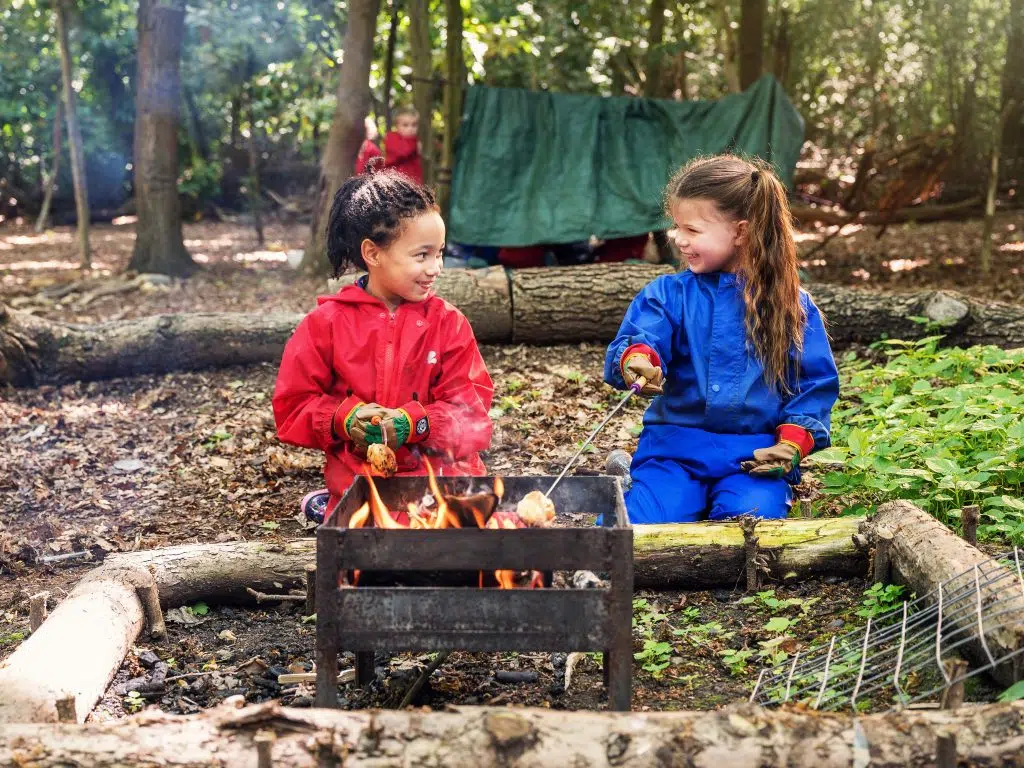
In forest school settings specifically, children are given extended time in a woodland environment, with activities that build over weeks and terms. This consistency is important. Children develop a relationship with a place, and that relationship supports not just their learning but their sense of security and confidence.
What does the research say about outdoor learning for young children?
The evidence base for outdoor learning in Early Years is substantial and growing. Research consistently finds that regular time outside improves physical health, fine and gross motor development, and sleep. It also has significant benefits for mental health and emotional regulation. Children who spend time in natural environments show lower levels of stress and higher levels of focus and self-regulation.
For language development, outdoor environments are particularly rich. The varied, unpredictable nature of the outdoors generates conversation naturally. Children describe what they see, ask questions, negotiate with peers, and encounter vocabulary that is genuinely new. This is a different kind of language learning from the structured vocabulary sessions of the classroom.
How does outdoor learning map onto the EYFS framework?
The Early Years Foundation Stage framework, which governs Early Years provision in England, explicitly recognises the outdoors as an essential learning environment. All seven areas of learning can be addressed through well-planned outdoor experiences. Physical development is the most obvious, but communication and language, understanding the world, mathematics, and personal, social and emotional development are all richly supported by outdoor provision.
At Farringtons, our Early Years team plans outdoor learning carefully to ensure it complements and extends what children are experiencing inside. Seasonal activities run throughout the year so that children develop a genuine sense of how the natural world changes over time. Spring planting, summer observation, autumn collection, and winter exploration all form part of a coherent outdoor curriculum.
What specific outdoor learning activities does Farringtons offer in Early Years?
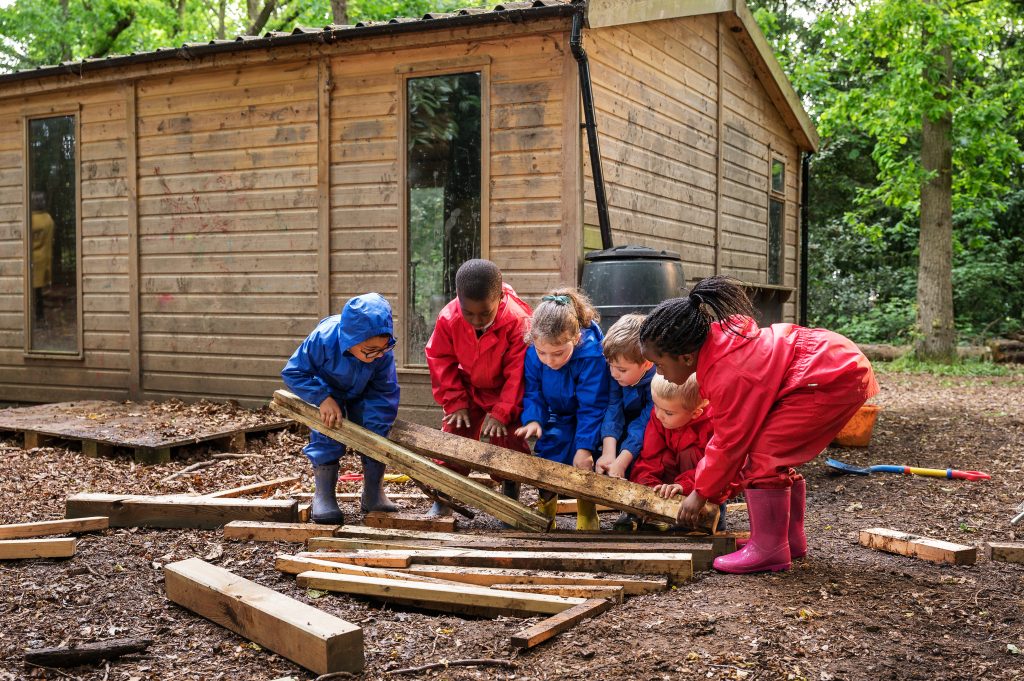
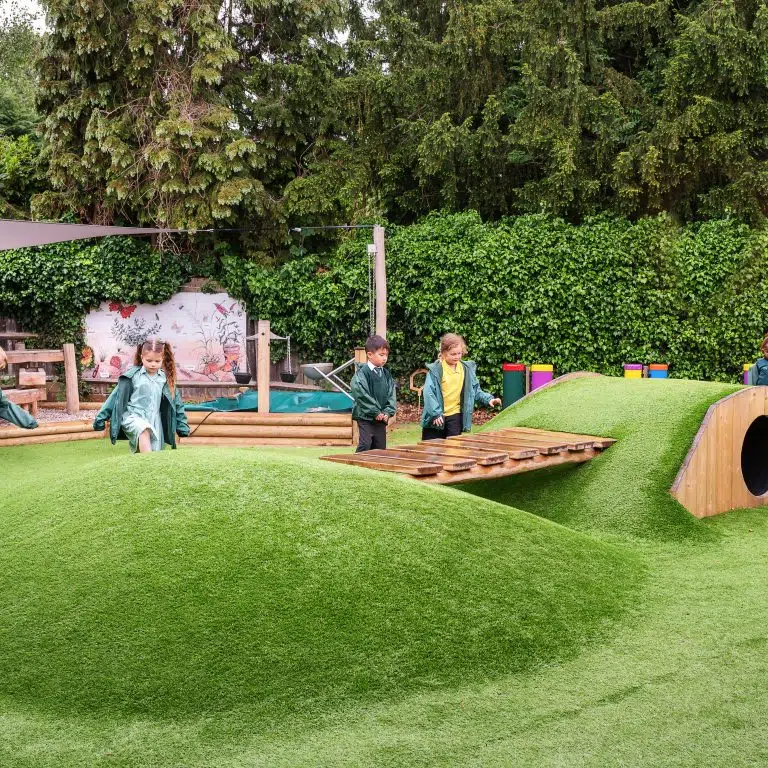
Our 25-acre site gives us space that many schools, particularly urban ones, simply do not have. Forest school sessions take place regularly, led by trained staff who understand how to create structured learning opportunities in a natural setting without over-directing children’s curiosity. Alongside this, children have access to outdoor learning spaces designed specifically for Early Years, with raised beds for growing, sensory areas, and open space for physical activity.
We also make use of the wider grounds for learning beyond the dedicated Early Years area. A walk around the school grounds becomes a science lesson, a maths lesson, or a stimulus for writing and creative work. The outdoors at Farringtons is not fenced off from the curriculum. It is woven into it.
How can parents support outdoor learning at home?
One of the most valuable things parents can do is allow children unstructured time outside, particularly in natural environments. This does not require a garden. Parks, common land, and woodland are all valuable. The key is time and freedom: not always directing the play, letting children get dirty, and resisting the urge to fill every moment with planned activity. At Farringtons, we are always happy to share ideas for extending outdoor learning at home. If you would like to find out more about our Early Years provision, please visit our Early Years page or come and visit us.