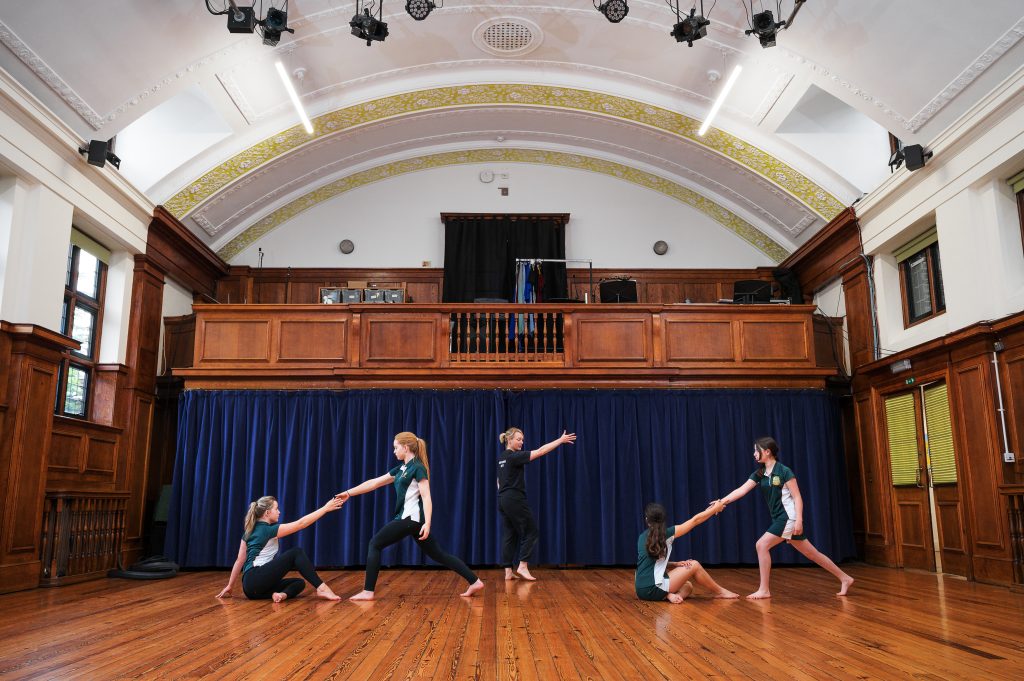
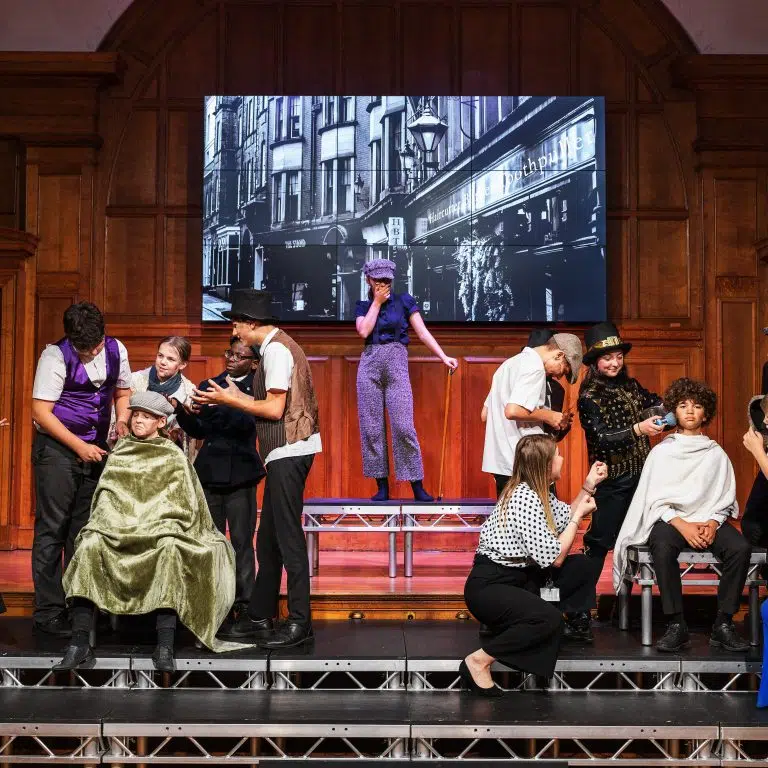
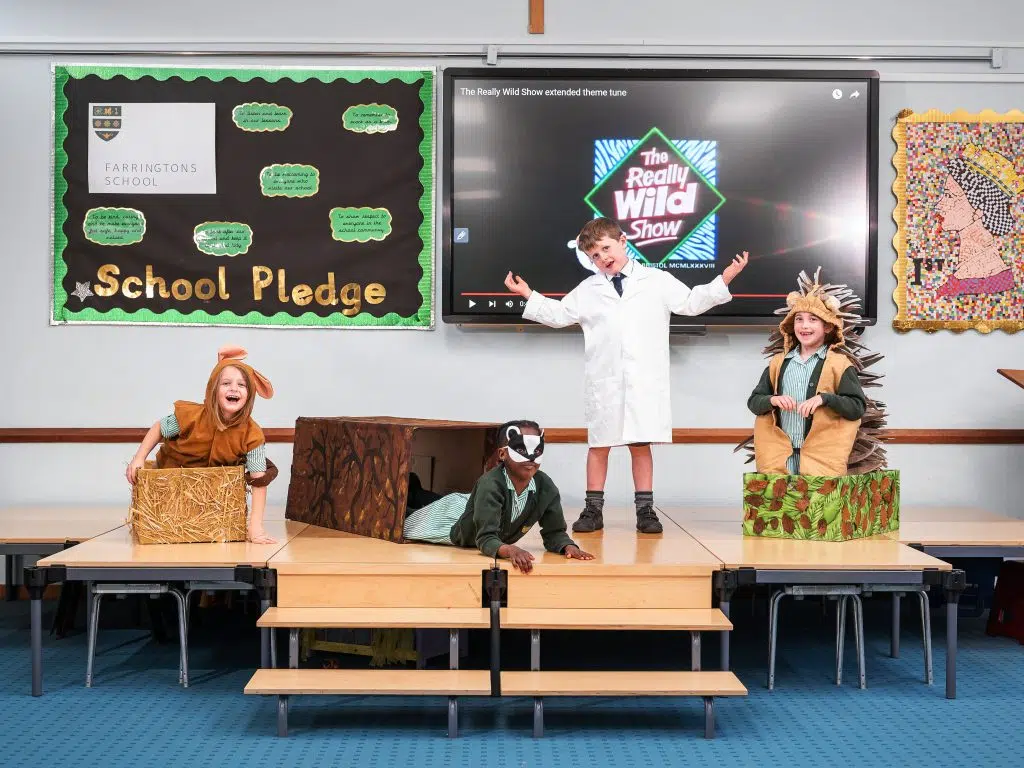
When we talk about performing arts in a school setting, it is easy to frame the conversation around productions, performances, and the small number of pupils who will go on to careers on stage or screen. But that framing misses what performing arts education is really about, and what it genuinely does for the vast majority of young people who participate in it.
At Farringtons, performing arts is not a bolt-on enrichment activity. It is a core part of our educational offer, and the skills it develops in confidence, communication, emotional intelligence, and collaboration are ones we see transferring directly into pupils’ academic work, their social lives, and ultimately into their adult careers.
How does drama build confidence in children and young people?
The mechanisms through which drama builds confidence are well understood. Standing up in front of others, using your body and voice to communicate, taking on a role that is different from yourself, and doing all of this in an environment where imperfection is expected and supported, these are genuinely confidence-building experiences. The key difference from many other confidence-building activities is that drama makes the challenge explicit and then works through it systematically.
Pupils who describe themselves as shy at the beginning of Year 7 very often look back at drama as the subject that changed something for them. It is not that they become performing extroverts. It is that they develop a relationship with their own presence and voice that serves them in every context where communication matters.
What is the relationship between performing arts and emotional intelligence?
Drama asks pupils to inhabit perspectives that are not their own, to understand motivations that differ from their own, and to express emotions with credibility and nuance. These are exercises in empathy. Research on social and emotional learning consistently identifies perspective-taking as one of the most important skills for healthy relationships, effective leadership, and personal wellbeing. Drama is, at its core, structured practice in perspective-taking.
Dance and music work similarly but through different channels. The discipline of physical or musical practice, combined with the expressive freedom it ultimately enables, develops pupils’ awareness of their own emotional and physical states in ways that support mental health and self-regulation.
How does performing arts support collaboration and teamwork?
Theatre is collaborative by nature. A production requires every contributor to be reliable, responsive, and genuinely invested in a shared outcome. There is no hiding in a cast. If one person misses a cue, everyone notices. If a scene lacks energy, the whole piece suffers. These are powerful lessons in interdependence and accountability that translate directly into team projects, group work, and workplace dynamics.
We often hear from employers and universities that performing arts alumni stand out in group settings. They tend to listen actively, read the room, communicate clearly, and take initiative without dominating. These qualities are not accidental. They are the direct product of years of ensemble work.
Why should families consider performing arts provision when choosing a school?
The quality and commitment of a school’s performing arts provision tells you something important about its values. Schools that invest seriously in drama, dance, and music are schools that believe in the whole person, not just the academic result. They tend to have stronger pastoral cultures, higher pupil engagement, and more confident leavers.
When you visit schools, we would encourage you to ask not just whether there are productions and events, but whether every pupil has access to performing arts regardless of ability. Whether there is specialist teaching. Whether performing arts is timetabled properly or squeezed into the margins. The answers are revealing.
What does performing arts look like at Farringtons?
Performing arts at Farringtons spans drama, dance, and music, and is open to pupils across the school. We produce regular performances and we have dedicated facilities for rehearsal and performance. Our teachers are specialists who care deeply about their subjects and about what those subjects do for the young people in their classes. Alongside formal lessons, we offer co-curricular performance opportunities that allow pupils to extend their participation beyond the timetable. You can find out more about life at our Senior School here, or come and hear from our staff and pupils at an open event.